| Date of Action |
Assembly Actions -
Lowercase Senate Actions - UPPERCASE |
|---|---|
| Mar 19, 2012 |
committee discharged and committed to rules notice of committee consideration - requested |
| Jan 05, 2012 |
print number 5450a |
| Jan 05, 2012 |
amend (t) and recommit to social services |
| Jan 04, 2012 |
referred to social services |
| May 24, 2011 |
referred to social services |
Senate Bill S5450
2011-2012 Legislative Session
Sponsored By
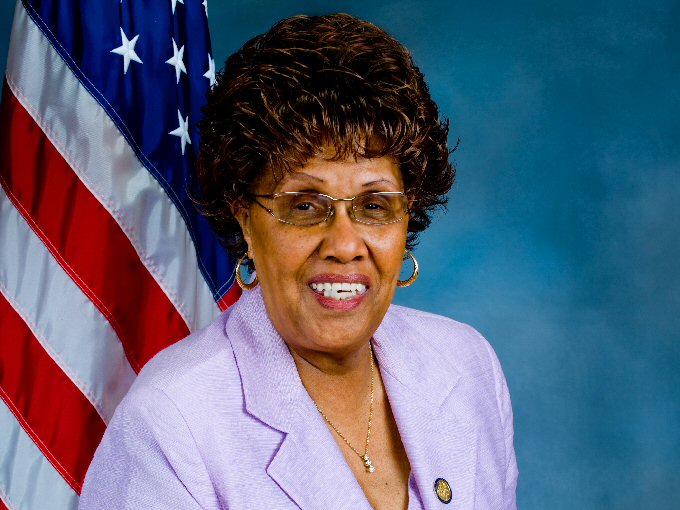
(D) Senate District
Archive: Last Bill Status - In Senate Committee Rules Committee
Actions
Bill Amendments
2011-S5450 - Details
- See Assembly Version of this Bill:
- A8022
- Current Committee:
- Senate Rules
- Law Section:
- Social Services Law
- Laws Affected:
- Amd §365, add §363-f, Soc Serv L
- Versions Introduced in 2013-2014 Legislative Session:
-
A1837, A8913
2011-S5450 - Sponsor Memo
                                BILL NUMBER:S5450

TITLE OF BILL:

An act
to amend the social services law, in relation to establishing the sickle
cell treatment act of 2011

PURPOSE:

To include primary and secondary preventative medical strategies,
treatment, and services, including genetic counseling and testing,
for individuals who have Sickle Cell Disease in the City of New York
and for no more than five counties.

SUMMARY OF PROVISIONS:

Section 365 of social services law amended by adding two new
subdivisions 13 and 14 Sub-section 3, subdivision 13: The health
Department shall be responsible for furnishing medical assistance for
preventative medical strategies. Preventative medical strategies and
medical services include chronic blood transfusion to prevent stroke
in those with a high risk for it, genetic counseling, and other
treatments.

Sub-section 4: The Commissioner of Health shall establish and conduct
2011-S5450 - Bill Text download pdf
                    S T A T E   O F   N E W   Y O R K
________________________________________________________________________

                                  5450

                       2011-2012 Regular Sessions

                            I N  S E N A T E

                              May 24, 2011
                               ___________

Introduced  by  Sen. HUNTLEY -- read twice and ordered printed, and when
  printed to be committed to the Committee on Social Services

AN ACT to amend the social services law, in relation to establishing the
  sickle cell treatment act of 2011

  THE PEOPLE OF THE STATE OF NEW YORK, REPRESENTED IN SENATE AND  ASSEM-
BLY, DO ENACT AS FOLLOWS:

  Section  1.  This  act  shall be known and may be cited as the "sickle
cell treatment act of 2011".
  S 2. Legislative findings. The legislature hereby finds  and  declares
the following:
  (1)  Sickle  cell  disease  (SCD) is an inherited disease of red blood
cells that is a major health problem in the United States.
  (2) Approximately 70,000 Americans have SCD  and  approximately  1,800
American  babies  are  born  with  the  disease each year. SCD also is a
global problem with close to  300,000  babies  born  annually  with  the
disease.
  (3)  In the United States, SCD is most common in African-Americans and
in those of Hispanic, Mediterranean, and Middle Eastern ancestry.  Among
newborn  American infants, SCD occurs in approximately 1 in 300 African-
Americans, 1 in 36,000 Hispanics, and 1 in 80,000 Caucasians.
  (4) More than 2,500,000 Americans, mostly African-Americans, have  the
sickle  cell  trait.  These Americans are healthy carriers of the sickle
cell gene who have inherited the normal hemoglobin gene from one  parent
and  the sickle gene from the other parent. A sickle cell trait is not a
disease, but when both parents have the sickle cell trait, there is a  1
in 4 chance with each pregnancy that the child will be born with SCD.
  (5)  Children  with SCD may exhibit frequent pain episodes, entrapment
of blood within the spleen, severe anemia, acute lung complications, and
priapism. During episodes of severe pain, spleen enlargement,  or  acute
lung  complications, life threatening complications can develop rapidly.
Children with SCD are also  at  risk  for  septicemia,  meningitis,  and

 EXPLANATION--Matter in ITALICS (underscored) is new; matter in brackets
                      [ ] is old law to be omitted.
                                                           LBD11759-01-1
co-Sponsors

(D, WF) Senate District
2011-S5450A (ACTIVE) - Details
- See Assembly Version of this Bill:
- A8022
- Current Committee:
- Senate Rules
- Law Section:
- Social Services Law
- Laws Affected:
- Amd §365, add §363-f, Soc Serv L
- Versions Introduced in 2013-2014 Legislative Session:
-
A1837, A8913
2011-S5450A (ACTIVE) - Sponsor Memo
                                BILL NUMBER:S5450A

TITLE OF BILL:

An act
to amend the social services law, in relation to establishing the sickle
cell treatment act of 2012

PURPOSE:

To include primary and secondary preventative medical strategies,
treatment, and services, including genetic counseling and testing,
for individuals who have Sickle Cell Disease in the City of New York
and for no more than five counties.

SUMMARY OF PROVISIONS:

Section 365 of social services law amended by adding two new
subdivisions 13 and 14 Sub-section 3, subdivision 13: The health
Department shall be responsible for furnishing medical assistance for
preventative medical strategies. Preventative medical strategies and
medical services include chronic blood transfusion to prevent stroke
in those with a high risk for it, genetic counseling, and other
treatments.

Sub-section 4: The Commissioner of Health shall establish and conduct
2011-S5450A (ACTIVE) - Bill Text download pdf
                    S T A T E   O F   N E W   Y O R K
________________________________________________________________________

                                 5450--A

                       2011-2012 Regular Sessions

                            I N  S E N A T E

                              May 24, 2011
                               ___________

Introduced  by  Sen. HUNTLEY -- read twice and ordered printed, and when
  printed to be committed to the Committee on Social Services --  recom-
  mitted  to  the Committee on Social Services in accordance with Senate
  Rule  6,  sec.  8  --  committee  discharged,  bill  amended,  ordered
  reprinted as amended and recommitted to said committee

AN ACT to amend the social services law, in relation to establishing the
  sickle cell treatment act of 2012

  THE  PEOPLE OF THE STATE OF NEW YORK, REPRESENTED IN SENATE AND ASSEM-
BLY, DO ENACT AS FOLLOWS:

  Section 1. This act shall be known and may be  cited  as  the  "sickle
cell treatment act of 2012".
  S  2.  Legislative findings. The legislature hereby finds and declares
the following:
  (1) Sickle cell disease (SCD) is an inherited  disease  of  red  blood
cells that is a major health problem in the United States.
  (2)  Approximately  70,000  Americans have SCD and approximately 1,800
American babies are born with the disease  each  year.  SCD  also  is  a
global  problem  with  close  to  300,000  babies born annually with the
disease.
  (3) In the United States, SCD is most common in African-Americans  and
in  those of Hispanic, Mediterranean, and Middle Eastern ancestry. Among
newborn American infants, SCD occurs in approximately 1 in 300  African-
Americans, 1 in 36,000 Hispanics, and 1 in 80,000 Caucasians.
  (4)  More than 2,500,000 Americans, mostly African-Americans, have the
sickle cell trait. These Americans are healthy carriers  of  the  sickle
cell  gene who have inherited the normal hemoglobin gene from one parent
and the sickle gene from the other parent. A sickle cell trait is not  a
disease,  but when both parents have the sickle cell trait, there is a 1
in 4 chance with each pregnancy that the child will be born with SCD.
  (5) Children with SCD may exhibit frequent pain  episodes,  entrapment
of blood within the spleen, severe anemia, acute lung complications, and

 EXPLANATION--Matter in ITALICS (underscored) is new; matter in brackets
                      [ ] is old law to be omitted.
                                                           LBD11759-02-1
Comments
Open Legislation is a forum for New York State legislation. All comments are subject to review and community moderation is encouraged.
Comments deemed off-topic, commercial, campaign-related, self-promotional; or that contain profanity, hate or toxic speech; or that link to sites outside of the nysenate.gov domain are not permitted, and will not be published. Attempts to intimidate and silence contributors or deliberately deceive the public, including excessive or extraneous posting/posts, or coordinated activity, are prohibited and may result in the temporary or permanent banning of the user. Comment moderation is generally performed Monday through Friday. By contributing or voting you agree to the Terms of Participation and verify you are over 13.
Create an account. An account allows you to sign petitions with a single click, officially support or oppose key legislation, and follow issues, committees, and bills that matter to you. When you create an account, you agree to this platform's terms of participation.