Legislators Oppose Shifting New Nuclear Costs Onto Ratepayers And Taxpayers
September 24, 2026
Krueger, Simon, and 34 Other Legislators Urge Governor Hochul and NYS Energy Officials to Reject New Nuclear Subsidies Paid For by New Yorkers
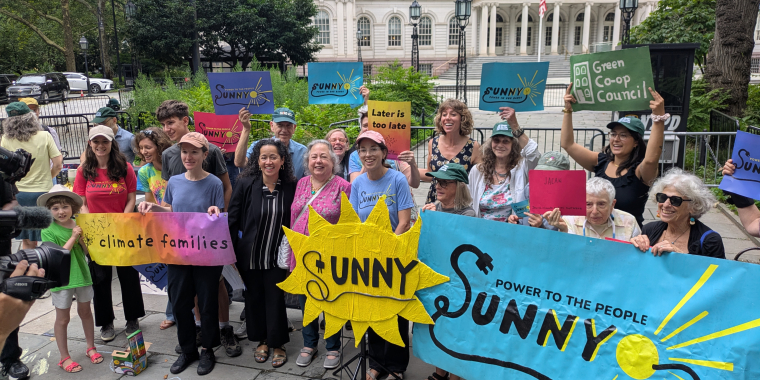
Albany – NYS Senator Liz Krueger and NYS Assemblymember Jo Anne Simon, joined by 34 other NYS legislators, expressed their opposition to Governor Kathy Hochul’s proposal to use taxpayer- and ratepayer-funded subsidies to support the construction of new nuclear power plants in New York. Recent nuclear projects in the United States have gone billions of dollars over budget, fallen years behind schedule, and burdened ratepayers with significantly higher bills.
The elected officials submitted official comments, linked here, opposing the plan in response to the NYS Energy Research and Development Authority and the Public Service Commission (PSC) request for comments on New York's Advanced Nuclear Policy Options Paper.
To cover the cost of a new nuclear facility, the State’s Policy Options paper suggested enormous surcharges on utility bills, taxpayer-funded construction grants, and public money that would also provide cost-overrun guarantees. The PSC estimated these subsidies could total $23.9 billion, likely an underestimate. New nuclear reactors would burden New Yorkers with higher electric bills while taking on the risk of paying billions in cost overruns.
“The idea that new nuclear generation is a realistic or even a desirable option for New York is just divorced from reality,” said Senator Krueger. “We need new generation now, not 15 or 20 years from now, and we need to lower costs for ratepayers, not saddle them with billions of dollars of liabilities that will drive up their rates for generations. Fortunately, the solution to both our affordability and our reliability needs is right in front of us - cheap, clean, fast-to-deploy renewable generation and storage paired with money-saving energy efficiency investments. Instead of wasting time and money chasing nuclear fantasies, let’s focus on what is already working in New York and around the world.”
“New York quite literally can’t afford to move forward with new, costly nuclear facilities," said Assemblymember Simon. "Recent nuclear projects across the country have been plagued by massive cost overruns and delays, leaving ratepayers to pick up the tab. Overly optimistic assumptions about what new reactors will cost and how long they will take to build don't begin to address the problem - New Yorkers face an energy affordability crisis now. Renewable energy is both cheaper and faster to deploy to scale. New York must prioritize its expansion."
The last nuclear facility built in New York was the Shoreham nuclear power plant on Long Island, which cost roughly 85 times its original estimate and left Long Islanders with some of the highest utility bills in the country. Local ratepayers had already paid most of the $6 billion to build the facility before public backlash over safety concerns led to it being decommissioned.
In Georgia–which built the first new nuclear reactor in the country in 30 years–the facility took 15 years to build, which was 7 years longer than planned, and cost more than double the original estimate to provide 2GW of power. The new nuclear generator led to a nearly 25% rate increase for Georgia Power customers. By comparison, over the past four years Texas has built 30GW of solar power and 6GW of storage for roughly the same cost as Georgia’s reactors.
In addition to being very expensive and taking a very long time to build, nuclear power is toxic and dangerous, generating hazardous waste and radioactive pollution while threatening catastrophic accidents. 84 years after the world’s first nuclear reactor was built in the U.S., there is still no solution for safe long-term disposal of radioactive waste. All that waste will remain a danger to New Yorkers, our environment, and our drinking water for many generations.
New York has better options than nuclear facilities, and the state legislators urged the Governor to invest in wind, solar, and thermal energy, which would meet the state’s energy needs sooner and at a lower cost.
###
Newsroom
Go to NewsroomLegislators Oppose Shifting New Nuclear Costs Onto Ratepayers And Taxpayers
September 24, 2026
Senator Krueger's August 2026 Update
August 28, 2026
Senator Krueger's July 2026 Update
July 31, 2026