
State Legislature Passes Mohawk River Basin District Legislation, Governor Urged to Sign
August 5, 2026
Bill establishes a Mohawk River Basin District to help communities along Mohawk River preserve, protect, restore and enhance natural asset
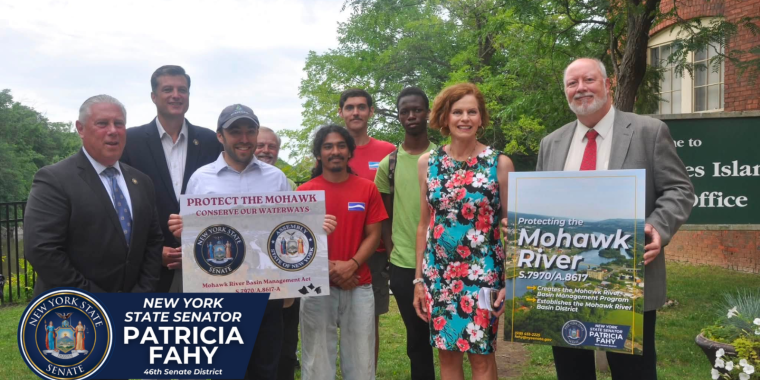
ALBANY, N.Y. – Today, Senator Patricia Fahy (D—Albany) and Assemblymember John T. McDonald III, RPh (D—Cohoes) were joined by Riverkeeper, environmental advocates, and community leaders from up and down the Mohawk River to urge Governor Hochul to sign their legislation (S.7970-A Fahy/A.8617-A McDonald) establishing a Mohawk River Basin District and Mohawk River Basin Management Program. The legislation passed unanimously in the Assembly and 60-1 in the Senate.
The Mohawk River, its estuaries, and its river basin spans a region of nearly 3,500 square miles with 14 counties, 172 municipalities, and over 600,000 constituents who depend on the region's economic contributions from agriculture, manufacture, storage, and shipping. Beyond the impacts to residents, the Mohawk River Basin has a significantly sized ecosystem including 6,600 total miles of rivers, canals, and streams, and 135 lakes, reservoirs, and ponds. The Mohawk River Basin is responsible for roughly 25 percent of the entire Hudson River drainage area.
The Mohawk River Basin has several native aquatic species that need protection from invasive aquatic species such as the Round Goby due to recent capture of invasive species samples in the Mohawk River as well as connected to the Hudson River. The Mohawk River Basin experiences pollution from numerous sources, including sediment, nutrients, and bacteria from agriculture, construction, and eroding banks. According to a 2024 report, gaps in environmental regulations enabled 89 million gallons of landfill leachate, chemically laced water runoff, to be dumped into the Mohawk and Hudson Rivers annually from 2019 to 2023.
Extreme flooding, driven in part by climate change, continues to impact much of Montgomery County given its wide array of streams, creeks, and tributaries. This bill would address these concerns by establishing a basin district and established management program and incorporating long-term planning and preservation of the Mohawk River Basin District. The established management program, informed the appointed committee and coordinator, will be equipped to guide ecosystem-based watershed management, updated at least every 10 years.
This oversight will provide for a new focus on identifying flood-vulnerable communities and implementing strategies for resilience, as well as the monitoring of pollutants and the suggestion of new policies to address new conservation issues.
Finally, an invasive species management plan that addresses aquatic invasive threats will better address invasive species and native species' interactions with the Erie Canal and historic watershed divides.
“The Mohawk River is one of the 46th District's greatest natural assets, defining communities up and down its shores for generations,” said Senator Patricia Fahy, bill sponsor. “Unfortunately, recent problems such as aquatic invasive species, extreme flooding events, and more have put the Mohawk River Basin at risk, including those in our communities who rely on it for fishing, work, and more. After working with scientists and stakeholders, the State Legislature passed my legislation to establish a Mohawk River Basin Management Program and Mohawk River Basin District to better protect the waterway we all know and cherish. I want to thank Assemblymember McDonald and our legislative partners for getting this bill over the finish line and establishing permanent, concrete protections for one of the Capital Region’s and New York State’s greatest natural assets.”
Assemblymember John T. McDonald III, RPh, said: "The Mohawk River has shaped the history of communities across our region for generations. The river is essential to our drinking water, recreation, agriculture, tourism, and local economy. At the same time, we have seen firsthand the growing challenges posed by flooding, invasive species, and pollution. By establishing the Mohawk River Basin District and a coordinated management program, New York will finally have the framework needed to protect this invaluable natural resource through science-based planning and regional collaboration. I am proud to partner with Senator Fahy on this legislation, and I urge Governor Hochul to sign this bill so we can better safeguard the Mohawk River Basin for today's residents and future generations."
"The Mohawk River is the Hudson's largest tributary, and its health is inseparable from the health of the entire Hudson River estuary,” said Riverkeeper President Tracy Brown. “For 60 years, Riverkeeper has fought to protect the waters that a quarter of a million New Yorkers depend on for drinking water, and we know firsthand that a river this size needs a coordinated, science-based management strategy to manage the growing threats of invasive species, excessive road salt, and toxic landfill leachate. We thank Senator Fahy and Assemblymember McDonald for their leadership in championing this legislation, and we urge Governor Hochul to sign it without delay."
“The Mohawk River is an incredible asset and one that sustains our communities, economy, and ecosystems throughout the Capital Region. Establishing the Mohawk River Basin District and Management Program ensures essential long-term planning to reduce flooding, curb pollution, and stop invasive species from destroying native habitats,” said Amsterdam Mayor Michael Cinquanti. “Thank you Senator Fahy, Assemblymember McDonald and the rest of the State Legislature for securing a safer, healthier future for the Mohawk and the 600,000 people who depend on it.”
“The Mohawk River is central to the history, identity, and quality of life of Schenectady and is vital to the economy of our entire region. I thank Senator Fahy for her leadership in advancing this important legislation and for recognizing the need for a coordinated, long-term approach to protecting the Mohawk River Basin. This initiative will help safeguard our water resources, strengthen flood resilience, combat invasive species, and preserve the river for future generations,” said Schenectady Mayor Gary R. McCarthy.
“The Mohawk River is among our community's greatest natural resources," said Village Of Canajoharie Mayor Ronald O. Dievendorf. “This waterway has shaped our history, supported our growth, and continues to define the character of Canajoharie. It provides important environmental benefits, recreational opportunities, and serves as a quality-of-life asset for residents, businesses, and visitors. At the same time, we understand the challenges posed by flooding, erosion, and changing weather patterns that impact communities throughout the basin. We strongly support efforts that improve water quality, reduce flood risks, and promote responsible stewardship throughout the region. The Village of Canajoharie appreciates the work being undertaken across the Mohawk River Basin and looks forward to continued collaboration in support of clean water, healthy ecosystems, public safety, and sustainable economic development throughout the region”.
Cohoes Mayor Bill Keeler: “Cohoes is one of many communities that source our drinking water from the Mohawk River. This wildly popular bipartisan bill will address a host of concerns, including flooding and pollutants. It also dovetails nicely with Governor Hochul’s many other water quality and climate resiliency projects across New York State. Kudos to Senator Fahy and Assemblymember McDonald for spearheading this.”
Waterford Town Supervisor David Ball:“We are fortunate to have an abundance of water, an often maligned and abused resource. We applaud Senator Fahy and Assemblyman McDonald’s effort to preserve the future of the Mohawk River basin.”
"The Mohawk River is one of New York State's most storied waterways. While its history is closely tied to transportation, today the River provides drinking water, drives hydropower, supports diverse ecosystems, and offers recreational opportunities. The Mohawk Basin Act comes at a critical time. Climate change is bringing more frequent and intense storms, our aging sewer infrastructure is degrading water quality, and invasive species from the Great Lakes threaten our fishery. Growing public interest and recreational use have strengthened the commitment of communities - from Cohoes to Rome - to protect the river and its tributaries. The Mohawk Basin Act is an important step toward science-based watershed management that will help protect this vital resource for future generations," said Dr. John Garver, Professor of Geology at Union College.
“The Mohawk River begins in the heart of the Adirondack Park, serving as a source of clean water, a vital recreational resource, and an important economic engine for communities throughout the basin,” said Raul J. Aguirre, Executive Director of the Adirondack Council. “Efforts to protect the Mohawk watershed are efforts to protect the health of the Adirondack Park. The basin is currently facing acute flooding and water quality challenges, including invasive species and harmful algal blooms. This bill would bring greater state attention and funding to the Mohawk River Basin Program and establish an advisory committee to help provide the resources and coordination needed to prevent and mitigate pollution, control invasive species, protect fish and wildlife, and keep drinking water clean and healthy.”
“For more than three decades, the Mohawk Hudson Land Conservancy has worked with communities across the Mohawk Valley to conserve the lands and waters that sustain our region’s natural heritage and quality of life. The creation of a Mohawk River Basin District represents an important step toward a coordinated, watershed-wide approach to protecting and restoring this vital resource,” said Mark King, Executive Director of the Mohawk Hudson Land Conservancy. “We applaud Senator Fahy, Assemblymember McDonald, and their partners for advancing this legislation and recognizing the importance of long-term stewardship of the Mohawk River for future generations.”
“Having worked with Riverkeeper for the past eight years to test water quality for the Upper Hudson River, NATURE Lab and its Water Justice Lab—the environmental education arm of the Sanctuary for Independent Media in Troy, NY—endorses the pending bill to establish the Mohawk River Basin management program. The Mohawk River feeds into the Hudson River at Troy, and the more we can care for these bodies of water that support so many people in both urban and rural habitats, alongside wildlife and aquatic ecologies, the better our futures will become,” said Kathy High and Ellie Irons, Co-Directors of NATURE Lab, The Sanctuary for Independent Media. “We applaud the efforts to pass this bill and hope that Governor Hochul will establish a Mohawk Management Commissioner and support efforts to observe, manage and support this thriving water system for our community and generations to come.
###
related legislation
Newsroom
Go to Newsroom


